
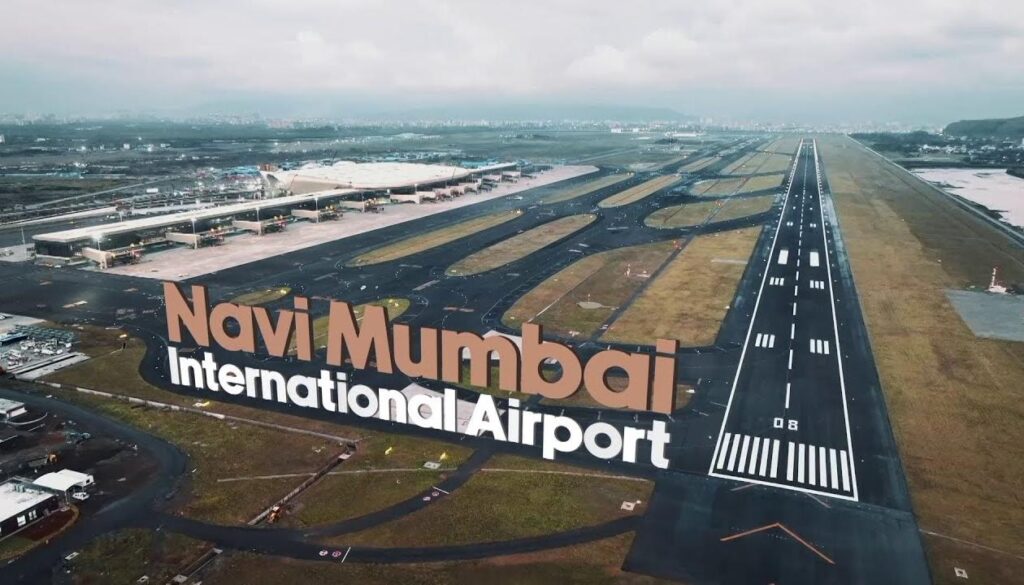
Navi Mumbai International Airport (NMIA)
Navi Mumbai International Airport (NMIA) is set to transform the real estate landscape of Mumbai 3.0, making it one of the most promising investment zones in India. With rapid infrastructure development, including Atal Setu, metro connectivity, and proximity to JNPT Port, the region is witnessing strong demand for land and plotted developments. Investing in plots near Navi Mumbai Airport offers high appreciation potential as connectivity and commercial growth continue to expand.
Land near Navi Mumbai International Airport is emerging as a top choice for smart investors looking for long-term returns. Locations such as Ulwe, Dronagiri, Ranjanpada, and Chirle are gaining popularity due to their strategic positioning within CIDCO and MMRDA planned zones. As the airport gradually increases passenger traffic and airline operations, real estate prices in surrounding areas are expected to rise significantly.
Mumbai 3.0 development is driving a new wave of growth across Navi Mumbai, with NMIA acting as the central growth catalyst. The upcoming aerocity, logistics hubs, and multi-modal transport connectivity will further enhance the value of land investments in this region. Buyers looking for secure and future-ready investments should consider plots near NMIA before the next phase of expansion pushes prices higher.
With Navi Mumbai International Airport currently in its early growth phase, this is the ideal time to invest in land and secure a position in one of India’s fastest-growing infrastructure corridors. As demand increases and development accelerates, early investors are likely to benefit the most from long-term capital appreciation and strategic location advantages.

Mumbai Metro Line 8 (Gold Line Metro)
The Mumbai Metro Line 8 (Gold Line Metro) is a major upcoming infrastructure project designed to provide seamless airport-to-airport connectivity between Chhatrapati Shivaji Maharaj International Airport (CSMIA) and Navi Mumbai International Airport (NMIA). Spanning approximately 35 km, this high-impact metro corridor will include around 20 stations and is being developed under a Public–Private Partnership (PPP) model with joint involvement from MMRDA and CIDCO. The route is planned from CSMIA (Andheri) through Kurla and the Sion–Panvel corridor to Navi Mumbai (Ulwe), ensuring fast and efficient connectivity across Mumbai Metropolitan Region (MMR). The metro line will feature a mixed structure, with underground sections (~9 km) in dense Mumbai areas near the airport and elevated stretches (~25 km) towards Navi Mumbai, making it both technically efficient and cost-effective. With an estimated project cost of ₹22,862 crore, construction is expected to begin around June 2026, with completion targeted by 2031.
In addition to the Gold Line Metro, MMRDA has explored multiple connectivity improvement plans between South Mumbai and Navi Mumbai, including coastal road extensions, underground tunnel concepts, and enhanced regional corridors. While these discussions often create speculation about routes like Colaba to Karanjade, it is important to note that such direct routes are currently concept proposals and not officially approved projects. However, the overall focus remains strong on improving direct access to Navi Mumbai and NMIA, which will significantly boost infrastructure development, reduce travel time, and increase real estate demand in key locations such as Ulwe, Panvel, Dronagiri, and surrounding Mumbai 3.0 zones.
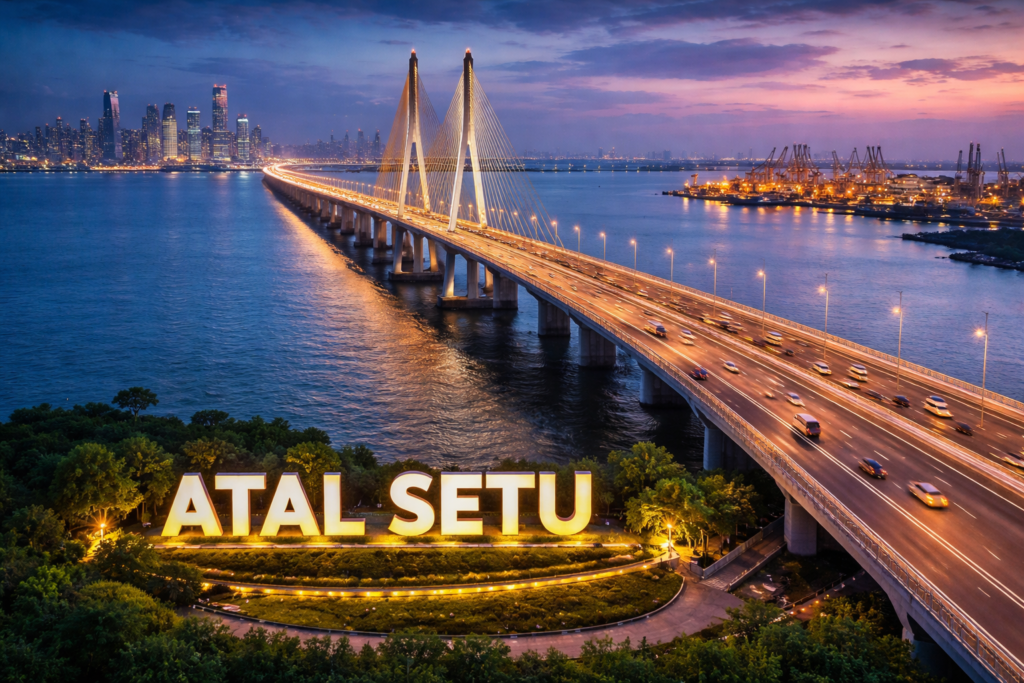
Atal Setu (Mumbai Trans Harbour Link – MTHL)
The Atal Setu, also known as the Mumbai Trans Harbour Link (MTHL), is a landmark infrastructure project that has transformed connectivity between Mumbai and Navi Mumbai. Stretching approximately 21.8 km across the Arabian Sea, it is India’s longest sea bridge and directly connects Sewri in South Mumbai to Nhava Sheva in Navi Mumbai. This modern expressway has significantly reduced travel time from nearly 2 hours to just 20–25 minutes, making it a game-changer for daily commuters, businesses, and logistics movement across the Mumbai Metropolitan Region (MMR). Its strategic location near the Navi Mumbai International Airport (NMIA), JNPT Port, and key industrial and logistics hubs makes it one of the most important infrastructure developments driving the growth of Mumbai 3.0.
The impact of Atal Setu on real estate and land investment in Navi Mumbai is substantial. Areas such as Ulwe, Dronagiri, Panvel, Uran, and surrounding MMRDA and CIDCO planned zones are witnessing rapid appreciation due to improved accessibility and increasing demand. The seamless road connectivity has opened up new corridors for residential, commercial, and industrial development, making Navi Mumbai a preferred destination for investors looking for long-term growth. Additionally, Atal Setu is well integrated with upcoming infrastructure projects like metro lines, highways, and multi-modal transport systems, further strengthening connectivity between Mumbai, Navi Mumbai, and Pune.
As Mumbai continues to expand towards Navi Mumbai under the Mumbai 3.0 vision, Atal Setu plays a critical role in decentralizing congestion from the main city and creating new growth hubs. The improved connectivity not only enhances ease of travel but also boosts economic activity, tourism, and employment opportunities in the region. For investors and homebuyers, properties located near Atal Setu offer a strong advantage in terms of location, future infrastructure benefits, and high return on investment. With continuous development and increasing demand, the areas connected by Atal Setu are expected to emerge as some of the most valuable real estate destinations in the coming years.